How e-commerce businesses can monetise their data for up to 3x business growth

Most companies calculate product profitability wrong
I have been there myself — starting my own e-commerce business we did not have fancy dashboards and state-of-art analytical reporting — we were calculating profitability based on the margin we were getting. This is wrong.
If you run this business for some time now, you are aware, that some products sell faster than others. Some products take more storage place then others, have different shipping costs (not always paid for by the customer), higher import duty or return rate. All of these factors have to be taken into account, when calculating product profitability the right way.
In my own e-commerce business, we developed a system, that was showing us how much net return can a product generate for us in a specified timeframe. We based this on our historical data, showing past transactions, orders etc.
Data collection
The inputs required for calculations:
- At least 6 (ideally 12 to account for seasonality) months of sales data.
- Import duty rate (if applicable).
- Import duty fees (if applicable).
- Applicable VAT rate.
- Delivery from manufacturer costs per unit.
- Cost of manufacture per unit.
- Storage costs per unit per day.
- Local shipment costs per unit (+ packaging).
- International shipment costs per unit (if applicable, can be averaged to simplify; + packaging).
- General marketing spend.
- Auction specific marketing spend.
- General fixed costs (office space, bookkeeping, labour etc.).
It sounds like a lot already, even though it is highly simplified for the purpose of this article. We tend to forget what role in product profitability plays a fact, that a larger unit requires eg. 2x the time to unpack and sort in the warehouse; or the fact that that even slightly higher return rate essentially doubles the total time required to sort / pack / re-pack the unit after it was returned (assuming return is not caused by a damage to the product).
General approach
Let me guide you through the process that we applied in my e-commerce business:
First we ensured that we have reliable data points, gathering all of the information above. Storage costs can get tricky. In our case we were outsourcing storage, hence got access to clear pricing (costs) on each of the units we were storing externally.
Then we analysed sales data that we had — we were quick to notice the trends in sale of a given product and knowing how long the manufacture takes, it became clear what size our bi-monthly orders should be. This also clarified all import duties, shipment from manufacturer and related costs. What’s more, we established clear seasonality trends and were able to assign average sale price — taking into account occasional sales and discounts offered, volatility in demand or the crazy Christmas season.
How we approached marketing spend? For the general spend (promoting brand as a whole, not one specific product) we attributed share of that spend equivalent to share of sales generated by a given product. We concluded that if product A is what customer buys after seeing our shop’s ad online, then product A is the profit result of that marketing spend we did.
Transformation
Given all these established data points, what we had to do was to transform it into one, unified system, that would perform calculations for us and automate as many decisions and actions as possible.
You have seen it yourself, right? Sales data in one place, marketing cost in another, each marketplace you sell on has its own, different system, invoices for shipment and couriers come in a crazy shape and form (I won’t call names, but we all know which company I’m talking about.. :)
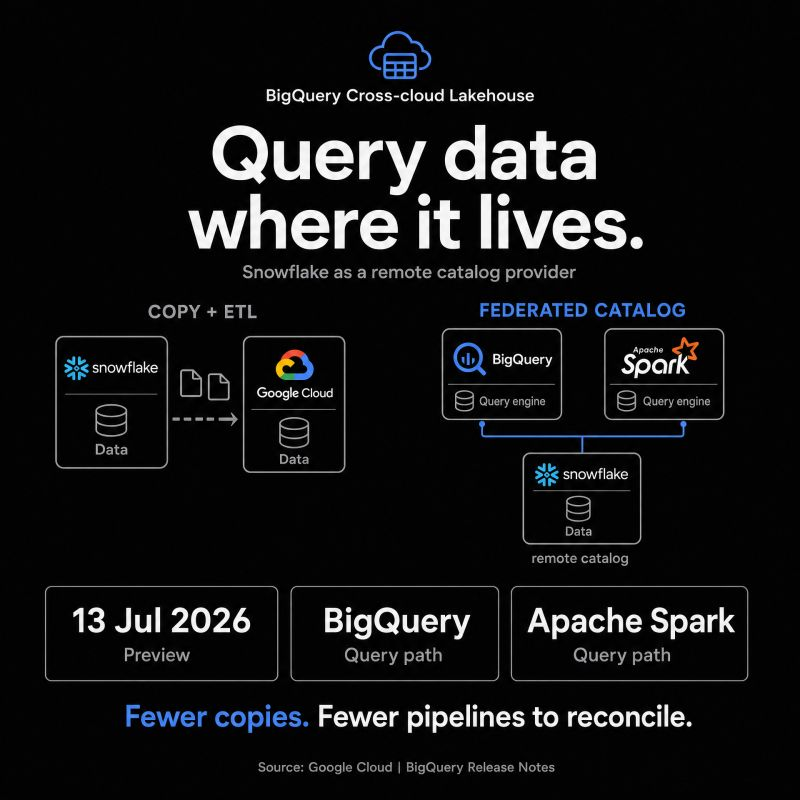
This is where we decided we need a single storage place. Place, where all of this data lands in a raw format, just as it is to begin with. In our case, Snowflake was a solution of choice.
Once we had that set up, we started preparing automations and transformations on all of these data points. I won’t get into much technical details, but during this step we weighted how much each of the data points is worth in the profitability matrix, how fast each product sales and how it impacts all of the costs — you name it. All the statistics to ensure we really know the net value to us.
Results
The results were astonishing, to say the least. I can tell you, we got rid of a dozen of products we were selling and thinking they’re making us a lot of money. Well, they were from the margin perspective, but not when we took into account all of the remaining data points.
As a direct result of this initiative, we completely automatised and transformed our data collection and processing. We removed products from our offer and shifted freed financial resources into products with a smaller margin, but also smaller size and weight, faster sell time, lower duty etc.
This initiative took us 3 months to complete from start to finish. 12 months after getting the first results of the product profitability, we were able to increase our profits by over 3x, without raising a single price or getting cheaper storage costs. Pure, data-driven decision making.
What’s more, as an added bonus, we have an automation in place that prepares the orders we need to do. All we have to do is review and approve it — then it goes straight to the manufacturer, shipment, arrives at our outsourced storage partner and appears online in a matter of hours since receipt at storage.
It is fair to say, that apart from increasing our profits, this transformation saved us anywhere between 10–15h a week. What could you do with that time and additional profits? Invest more in your business? Take finally some time off? Go for a nice vacation?
Feel free to get in touch with me if you want to learn more and have your e-commerce business transformed the same way.
Summary
Most companies calculate product profitability the wrong way. Looking only at the margins is not going to get you anywhere. in this article, we showed clear process on how to:
- Gather the data points that you need.
- Make use of them for decision making, then automate.
- Enjoy the results — 3x profit growth in our case!
How can I get help with these initiatives?
All of that sounds great, but you’re thinking: “where do I get started?” “I am not sure I understand it fully?” “My team is too busy anyway — I can’t ask them to implement all of these new procedures and optimisations..”
We get it. It’s more common than you think. This is why 97% of your data costs you money instead of working for you. That’s what we’re here for — book a free, introductory call with us to get yourself started; you can choose a time of your convenience here:
Are you leaving money on the table? was originally published in Lortech Solutions Blog on Medium, where people are continuing the conversation by highlighting and responding to this story.